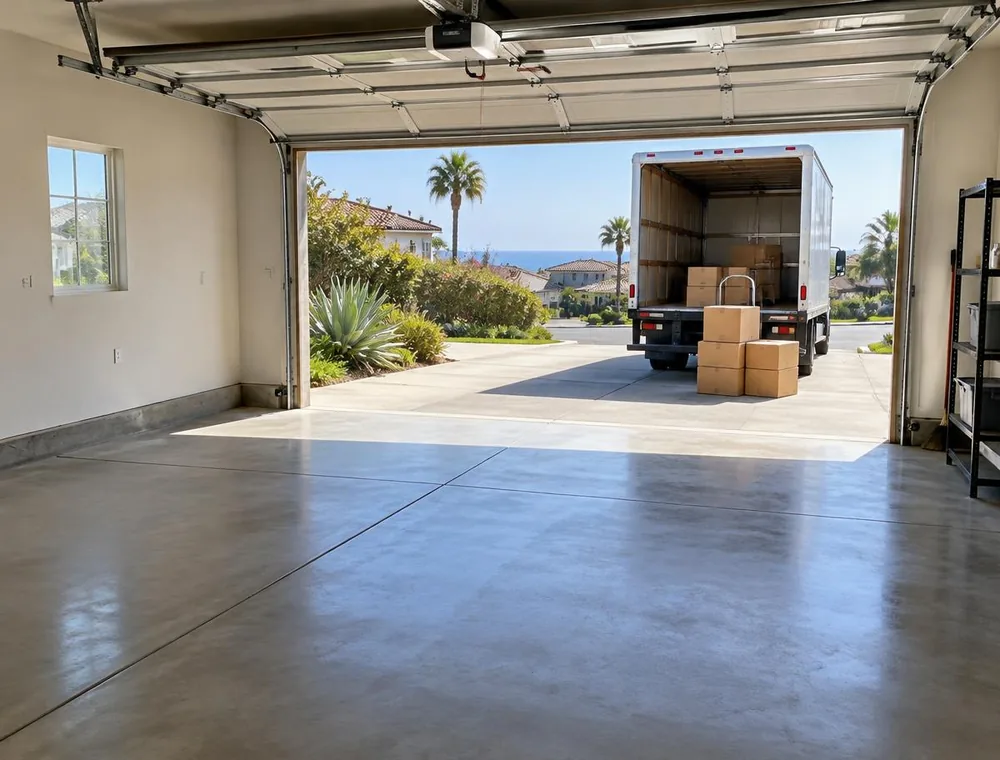
Junk removal in San Diego County means paying a hauler to load unwanted items and take them off a property. A cleanout means clearing a whole space, such as a garage, a home or a rental unit. How each item leaves depends on what it is, how much there is, how it is reached and where it can go.
If you are clearing a space, it may come with a deadline, a full house or a set of hard decisions about what to keep. This guide is written for San Diego County homeowners, renters, landlords, property managers, executors and business owners in that spot. It walks through the kinds of jobs, the items that may need separate handling, what to set aside and what shapes a written quote, so your next step is easier to see.
Deciding What Kind of Job This Is
Junk removal is the hauling away of unwanted items from a property: a broken recliner, an old washer, a pile of boxes. Hauling is the loading and transport itself. A cleanout is broader. It clears an entire space, from a single garage to a full house, and usually involves sorting along the way.
Junk removal jobs in San Diego can be a single sofa or a truckload of mixed household items. Junk hauling can also mean clearing a business; commercial junk removal follows the same logic of sorting, access and disposal. Whether you are turning over a rental unit, clearing a parent's home as executor or reclaiming your own garage, the starting questions are the same: what is there, what stays, and how the rest leaves.
Not everything leaves the same way. Some items go to a transfer station, a facility where collected materials are sorted before moving on to a landfill, a recycler or another destination. Some may be accepted for donation or recycling. A few may need handling apart from the rest.
Sorting Out What Shapes the Removal
Most removals come down to four things: the kind and amount of items, their weight, the access, and where each item can be taken. These same four factors also drive the price.
Access often matters as much as volume. Stairs, narrow hallways, a gated entry, a long walk to the curb or limited parking all change how a job is planned. A heavy item on an upper floor is a different task from the same item sitting in a driveway.
The item type matters too:
- Furniture. Furniture removal jobs include sofas, beds, dressers and tables; couch removal and mattress removal are among the common single-item jobs.
- Appliances. Appliance removal covers refrigerators, washers, dryers and similar units, some of which need separate handling.
- Outdoor and project materials. Yard waste removal, construction debris removal and hot tub removal each involve their own weight, access and disposal questions.
Finding Your Situation Among Cleanout Types
A garage
A garage cleanout usually means stored items, tools, old furniture and boxes that built up over time. If this is your situation, the main variables are the sorting decisions and how easily the garage door and driveway can be reached.
A whole house or an estate
Whole house cleanouts clear an entire property, often with the widest mix of items. An estate cleanout follows a death in the family, and here the order matters: the executor or family decides on keepsakes, papers and items of value first, and the cleanout follows those decisions. What happens to the house afterward is a separate decision; clearing it does not require selling it.
A home where things have accumulated
A hoarder house cleanout is a high-volume, high-variety job where access and sorting take more care.
A rental, a move-out or a foreclosure
Rental property cleanouts and foreclosure cleanouts usually happen after an occupant has left; move-out cleanouts and mobile home cleanouts raise similar questions. California law governs what a landlord may do with a former tenant's belongings left behind, and an attorney confirms how that rule applies to a particular unit.
Setting Aside Items That May Need Separate Handling
Several kinds of material may not go out with the rest of a load. Spotting them early keeps a pickup from stalling.
| Category | What it means | Where the current rules are set |
|---|---|---|
| Household hazardous waste | Materials that are flammable, corrosive, reactive or toxic, such as paint, solvents, pesticides, batteries and fluorescent bulbs | The local household hazardous waste program |
| Electronic waste | Unwanted televisions, monitors, computers and similar devices | Electronics recyclers |
| Appliances with refrigerant | Refrigerators, freezers, air conditioners and dehumidifiers | Local appliance programs or facilities |
| Mattresses and tires | Bulky items with their own collection channels | Local recycling or disposal programs |
| Green waste | Yard trimmings, branches, leaves and other plant material | The local green waste or organics program |
| Construction and demolition debris | Concrete, drywall, lumber, roofing and similar material from building or renovation work | Local debris facilities |
Each category has its own rules, and they can differ from one city to the next.
Weighing a City Pickup, a Donation or a Hauler
The City of San Diego's Environmental Services page says: "Please note that the City of San Diego does not provide bulky item pickup or curbside pick-up services." If your property is in another city of the county, that city confirms whether it offers a bulky-item pickup and what it accepts.
Donation is another route for items in usable condition. Whether a given piece is accepted is the receiving organization's decision, based on its condition and what it takes, so acceptance is not assured in advance.
Comparing routes comes down to a few points: cost, timing, who does the carrying and transport, and what each route accepts. The same points apply to a bulky item pickup, where a city offers one, and to renting a dumpster and loading it yourself.
Getting the Space Ready for a Pickup
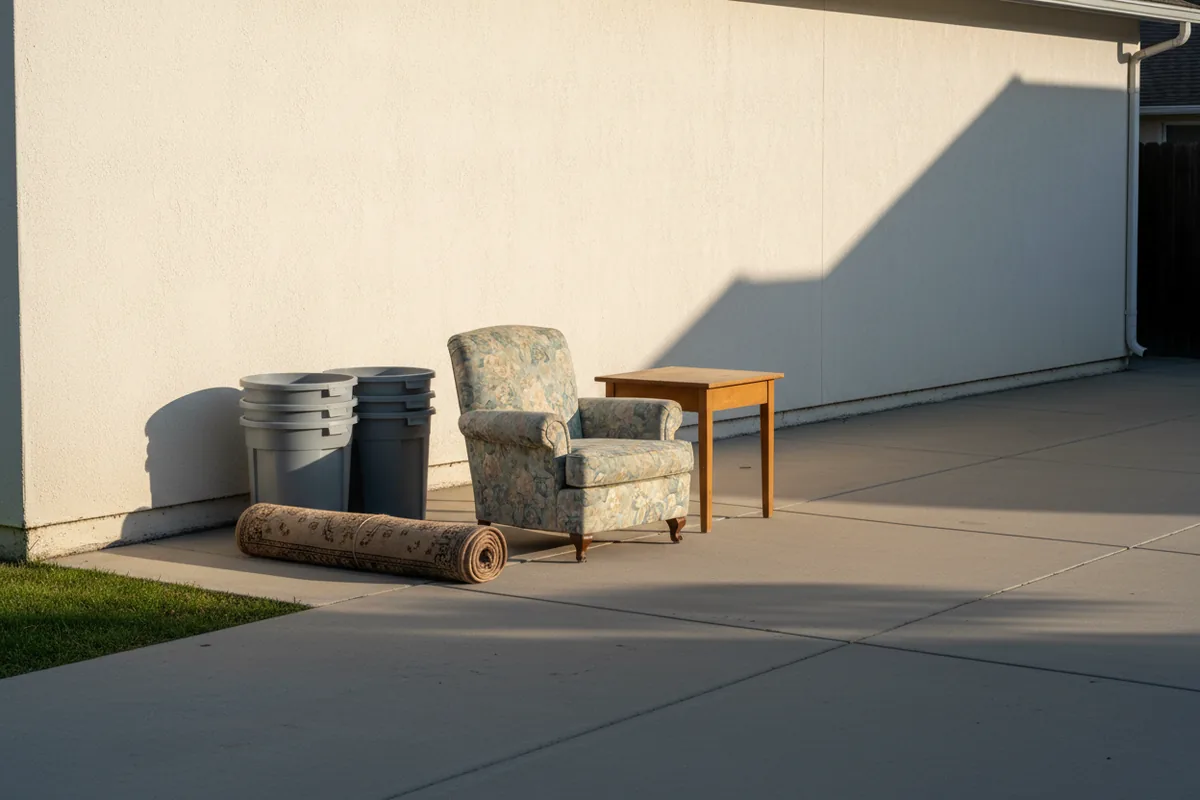
Whatever the route, the same groundwork helps. Whether it is your garage, a rental unit or a relative's home, these are the things people typically gather and check:
- Papers and keepsakes. Documents, photos and anything someone else may want are decided on first.
- Items of value. Anything to be kept, sold or given to family is separated or clearly labeled.
- Parking. Where a vehicle can stop and how far it is to the door.
- Stairs and tight spots. Flights of stairs, narrow halls and elevator access in multi-unit buildings shape the job.
- Association rules. A homeowners association or a gated community may have its own rules on access and timing.
- Special-handling items. Paint, batteries, electronics, appliances with refrigerant, tires, mattresses and debris are pulled out ahead of time.
- Timing. A move-out date, a probate deadline or a sale date is worth knowing up front.
- Volume. One room, a full garage or a whole house points to different kinds of service.
Anything not yet decided can wait; it is easier to hold a few boxes back than to retrieve something already gone.
Understanding How Junk Removal Pricing Works in San Diego
Junk removal pricing in San Diego starts from the same four factors. Two further points shape the figure: debris and special-handling items are priced differently from ordinary household goods, and the timing the job has to fit can also affect the total. A written quote sets these out once the details are known.